Bali's best waterfalls: a 2027 guide to fees, hike times and the wet-season catch
October 29, 20267 min read6 views
bali-waterfallsbali-travel-guideubud-adventuresmunduk-balisekumpul-waterfalltukad-cepungnorth-baliwaterfall-hikingbali-2027bali-rainy-season
Bali's best waterfalls: a 2027 guide to fees, hike times and the wet-season catch
Bali's beaches get the press. The waterfalls show the island's bones. Volcanic runoff cut through soft rock for thousands of years. That left gorges, cold plunge pools and very steep stairs across the central and northern highlands.
Two things matter for a 2027 trip. Village ticket counters standardized prices after a 2023 crackdown on forced guiding. The wet season also arrives late this year. BMKG expects most of Bali to stay dry through November 2026. The rains then come in a short, intense season that peaks in February 2027. That changes which months to book and which canyons to avoid.
The top waterfalls to add to your hit list
Some are a five-minute walk from the road. Others are a proper jungle trek with a river crossing. The six below cover both, and the prices are the ones posted for the 2026-27 season.
1. Sekumpul Waterfall (the king of cascades)
Deep in Buleleng, an hour inland from Lovina, Sekumpul is the island's most spectacular single sight: seven narrow cascades dropping around 80 meters into a bowl of jungle.
The pricing is clear now. Entry at the village gate is IDR 20,000. A licensed local guide for the descent is IDR 150,000 per person for three to four hours. The combined Sekumpul and Fiji trek is IDR 250,000, including village permits (guide rate, Fiji trek).
That is a change from the bad old days. In November 2023, guides at the ticket counters blocked visitors who refused guided tours priced at IDR 300,000 to 500,000. The Buleleng tourism office shut the counters. It then let them reopen under a village agreement, with standardized tickets (Bali Sun).
Guides now have to pass a competency test. The regency has 146 registered guides and trains only 20 to 25 more a year, which is why the good ones book out in high season. Buleleng also requires lifeguards at water attractions, with 120 certified across the regency (Bali Sun).
The descent is steep: hundreds of steps, a river crossing, and spray that soaks you before you reach the base. Go at 8am. The car park fills by 10.
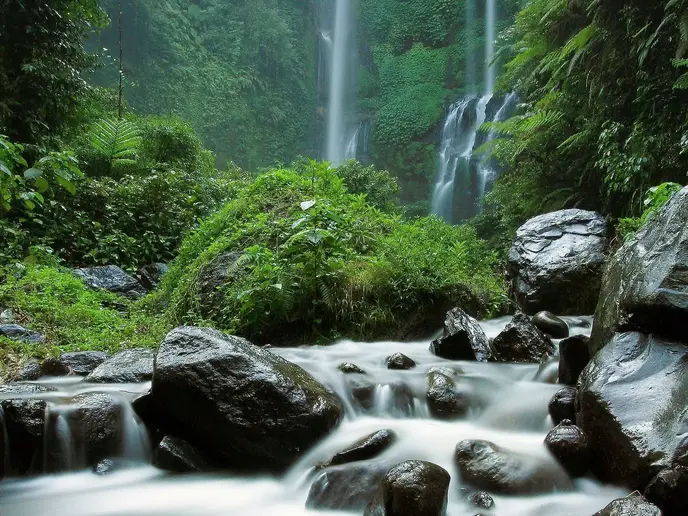
Two of Sekumpul's cascades seen from the river crossing at the base. Photo: Nyoman Gita Astadi, CC BY-SA 4.0, via Wikimedia Commons; cropped, resized and converted to WebP.
2. Tukad Cepung Waterfall (the sunbeam cave)
Tukad Cepung in Bangli is the waterfall where the light matters more than the water. You walk down 15 to 20 minutes of steep stone steps, then wade up a shallow river between mossy walls until the canyon closes overhead.
Entry is IDR 30,000 to 35,000 in cash. The booth does not take cards. It opens around 7am and closes at 6pm. The beam hits between 9am and 11am, strongest around 9:30 to 10:30. The site closes on days of heavy rain (Insight Bali).
One ticket covers the smaller fall a short walk downstream. Arrive at 8, shoot, and leave before the vans arrive at 10. The canyon is a genuine flash-flood trap, so check the sky, not just the forecast.
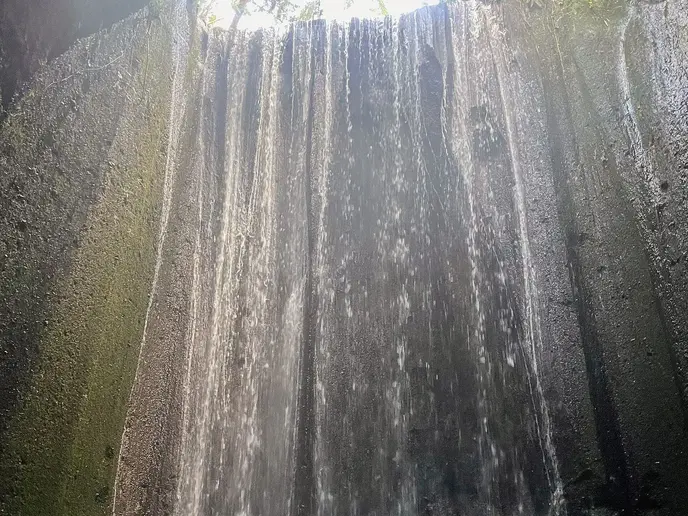
The main fall at Tukad Cepung, where the canyon closes overhead. Photo: Bex Walton, CC BY 2.0, via Wikimedia Commons; cropped, resized and converted to WebP.
3. Leke Leke Waterfall (the jungle chute)
Leke Leke in Tabanan is the easiest serious-looking waterfall on the island. A bamboo trail drops through an eco-farm and over a suspension bridge in about 15 minutes. It ends at a single chute that falls into a shallow pool.
Entry is IDR 50,000. There is a small cafe at the top and almost no shade on the return climb. Weekday mornings are quiet, but Sunday is not.
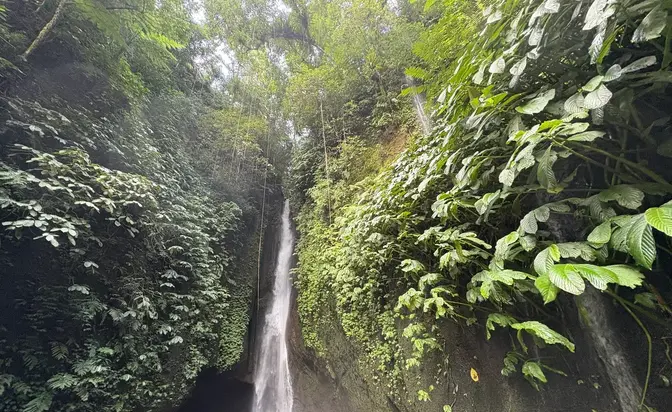
The single chute at Leke Leke, framed by the eco-farm's jungle. Photo: Chainwit., CC BY 4.0, via Wikimedia Commons; cropped, resized and converted to WebP.
4. Tegenungan Waterfall (the accessible crowd-pleaser)
Twenty minutes from Ubud, Tegenungan is the waterfall you visit when you have half a day and no appetite for a trek. You get paved stairs, viewing platforms and photo swings. The wall of water runs brown for a day or two after rain.
Entry is IDR 30,000. The car park opens early and the tour buses land between 10am and 3pm. Go at 7.
Blangsinga is the same waterfall from the other bank. Pick one entrance, not both.
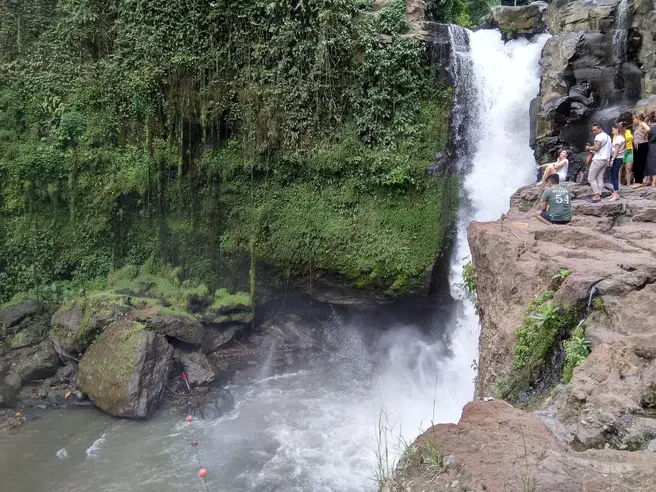
Tegenungan's main chute, best reached before the tour buses. Photo: Karter873, CC BY-SA 4.0, via Wikimedia Commons; resized and converted to WebP.
5. Banyumala Waterfall (the twin fall above Munduk)
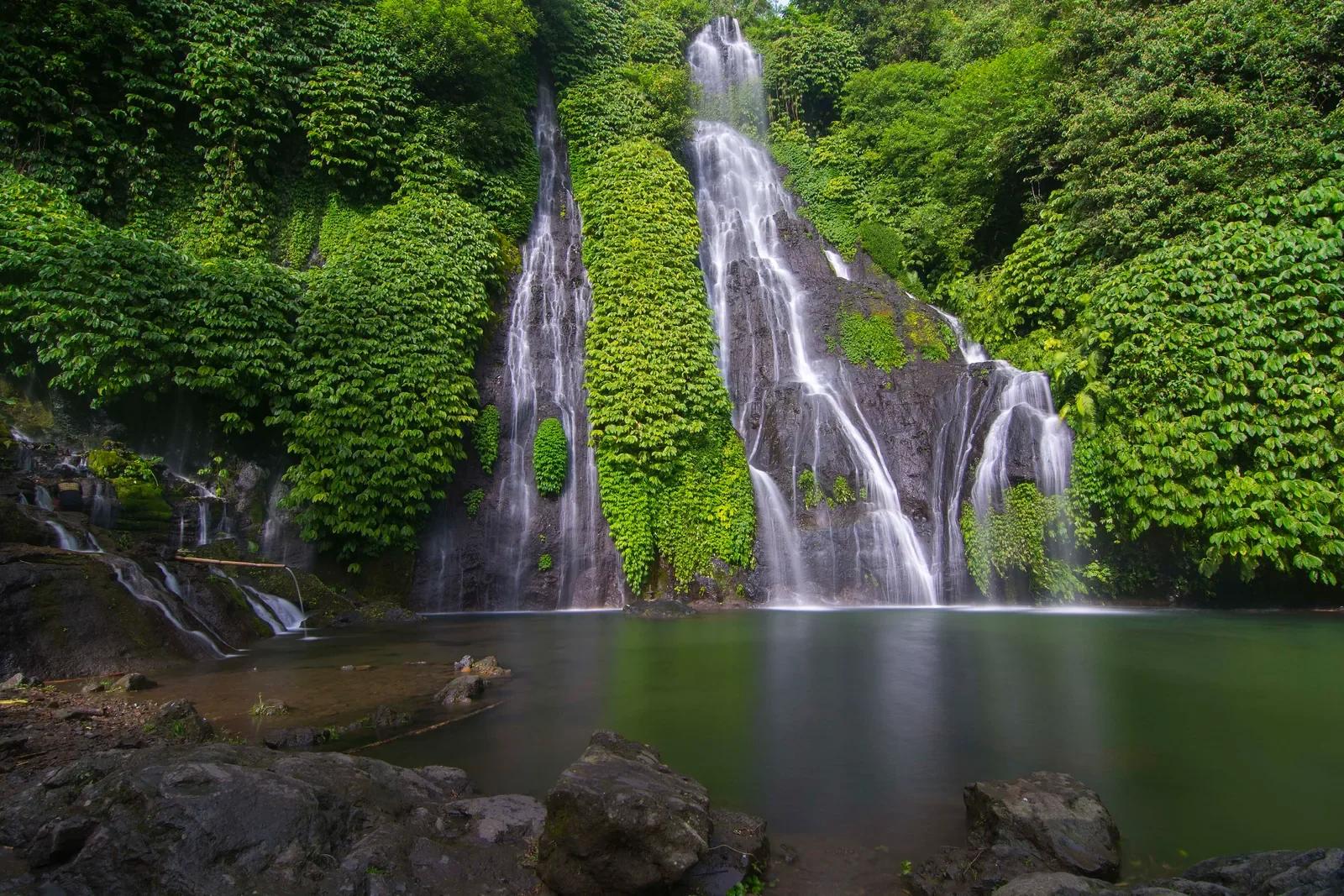
Thirty minutes up a broken lane from Munduk, Banyumala is two streams dropping side by side into a green pool. The walk is 20 minutes down a concrete path, steeper than it looks.
Entry is IDR 50,000. There are changing rooms and a warung at the top. The pool is deep in the middle. It is quieter than Sekumpul and easy to combine with a Munduk morning.
6. Munduk and Melanting (the village circuit)
Munduk is a highland village with three waterfalls within walking distance of the road: Munduk, Melanting and Golden Valley. Entry runs IDR 20,000 to 45,000 per fall. The gate you use sets the price.
The trail between them is a proper jungle walk, muddy after rain, with clove and coffee trees worth noticing. The air is noticeably cooler than the coast. Bring a layer.
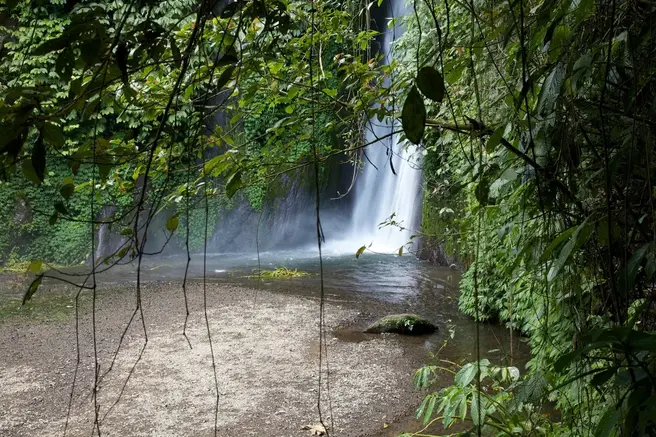
Munduk's main fall, with the riverbed in the foreground. Photo: Jean-Marie Hullot, CC BY 3.0, via Wikimedia Commons; resized and converted to WebP.
Which one fits your day
Best single waterfall: Sekumpul. Nothing else on the island matches the scale, and the guided price is finally transparent.
Best for photography: Tukad Cepung, in position by 9 and staying until 10:30, then Leke Leke for the jungle frame.
Best for kids or a half-day: Tegenungan. Paved, short, and 20 minutes from Ubud.
Best for solitude: Banyumala on a weekday morning, or the Munduk circuit when it rains.
Bali waterfalls: quick reference
Waterfall | Region / Regency | Hike Difficulty | Entry Fee (IDR) | Best Time to Visit |
|---|---|---|---|---|
Sekumpul | Buleleng (North Bali) | Strenuous (45-60 mins) | 20,000 view; 150,000 guide; 250,000 with Fiji | 8:00-10:00 |
Tukad Cepung | Bangli (East-Central) | Easy-Moderate (15-20 mins) | 30,000-35,000 cash | 9:00-11:00 for sunbeams |
Leke Leke | Tabanan (Central Bali) | Easy (15 mins) | 50,000 | 7:30-9:00 |
Tegenungan | Gianyar (near Ubud) | Easy (10-15 mins of stairs) | 30,000 | 7:00 before the buses |
Banyumala | Buleleng (above Munduk) | Moderate (20 mins) | 50,000 | 8:00-10:00 |
Munduk & Melanting | Buleleng (highlands) | Moderate (jungle trail) | 20,000-45,000 per fall | Any time; cool all day |
Kanto Lampo | Gianyar (near Ubud) | Easy (paved stairs) | 25,000 | 7:00-9:00 |
Tibumana | Bangli | Easy (10 mins) | 25,000 | 7:00-9:00 |
Nungnung | Badung (highlands) | Strenuous (long staircase) | 30,000 adult; 20,000 child | 8:00-10:00 |
Aling-Aling | Buleleng | Moderate to strenuous | 10,000-20,000 view; 125,000+ guided | 8:00-10:00 |
Fees checked November 2026 against Bali Holiday Secrets' Bali entrance fee list, updated 13 November 2026. Most gates are cash only; carry small notes. None of these fees include the provincial tourist levy (IDR 150,000, paid once per trip). The province collects that separately.
What the 2027 wet season changes
BMKG's seasonal forecast, reported on 29 October, put the start of the 2026-27 rainy season in December for 17 of Bali's 20 seasonal zones. That covers 85 percent of the island. Three upland zones, including Pupuan and Payangan, start in November. BMKG expects a shorter season than normal, but not a drier one. The same rain falls in fewer weeks, and the peak hits in February 2027 for 80 percent of the island (Bali Kini).
The season changes the waterfall calendar. December is the transition month: dry for most of it, then the first big storms, with the falls still thin. January and February deliver volume, but the water runs brown and the canyons are dangerous. March and April are the sweet spot: full falls, clearing water, fewer people.
Access is the other risk. On 8 April 2026, a landslide and flash flood hit Gitgit, the waterfall village south of Lovina. It buried a kilometer of the only road and cut off 27 families for days (Bali Sun). North Bali's waterfall roads run along steep, clay-heavy slopes. After a big night of rain, ask your driver or your guide whether the road is open before you set out. If the answer is vague, go somewhere else.
3 golden rules for waterfall explorers
Pack a dry bag. The mist at the base is relentless and you will cross at least one river. A dry bag keeps your phone, camera and spare clothes usable.
Leave the flip-flops at the hotel. Trails involve wet, mossy rock, river wading and slippery mud. Strap-on sandals or water-resistant trail shoes will save you from a nasty fall.
Watch the river. If the river is rising, brown, or carrying leaves and branches, get out. That is the flash-flood signature, and it happens faster in a slot canyon than on an open trail.
Bali's waterfalls are spread across four regencies, and the roads between them are the slow part. Sekumpul and Banyumala sit two hours apart. Tukad Cepung and Tegenungan are 90 minutes apart in traffic. A scooter is cheap and miserable in the rain. A private car charter through BaliRoam gives you a driver who knows which lanes flood and which gates are open. You reach Sekumpul before the first minibus.
Frequently Asked Questions
What should I pack for visiting Bali waterfalls?
A waterproof dry bag. The mist at the base of the falls is relentless, and you will cross at least one river on the way in.
What kind of footwear do I need for waterfall hikes in Bali?
Leave the flip-flops at the hotel. Trails involve wet, mossy rocks, river wading, and slippery mud. A solid pair of strap-on sandals or water-resistant trail shoes will save you from a nasty slip.
Is it safe to visit Bali waterfalls during rainy season?
Heavy downpours can cause flash floods in narrow canyons and turn clear pools into muddy brown torrents. Keep an eye on the sky and avoid narrow canyon waterfalls like Tukad Cepung when heavy rain is forecast.