Beyond the beach clubs: authentic local experiences in Bali
November 23, 20269 min read6 views
bali-travel-2027authentic-balicultural-experiencesbali-off-the-beaten-pathbalinese-templesubud-marketspenglipuran-villagejatiluwih-rice-terracesmelukat-purificationbali-ceremonies
Beyond the beach clubs: authentic local experiences in Bali
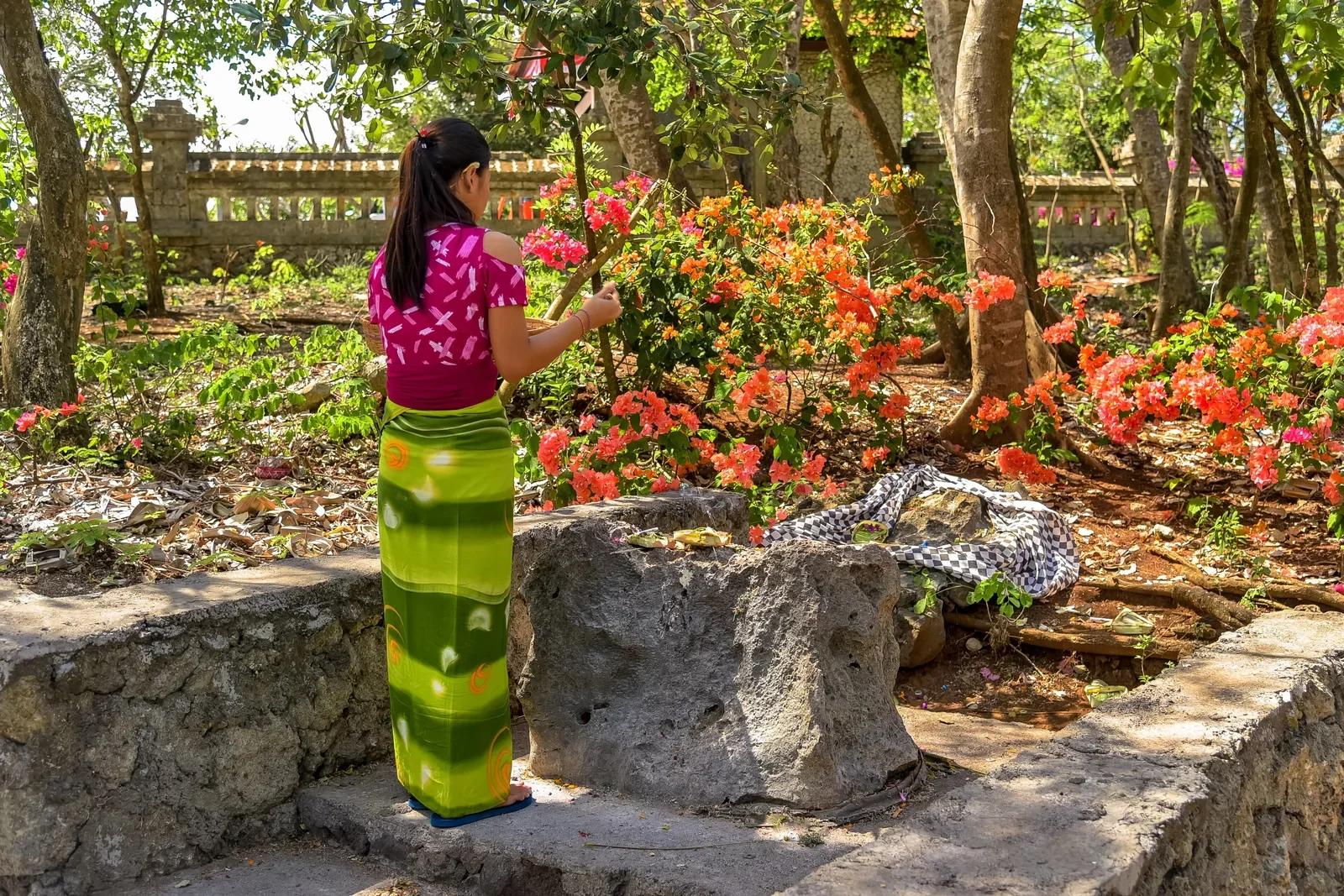
Bali is famous for its infinity pools, beach clubs and cafes. But stick to Seminyak or Canggu and you miss the real island. You notice the incense at seven in the morning. Gamelan drifts from a village temple. A stranger offers you a seat and coffee before you have said two words.
Each experience below puts you among people who live here. Most now cost a little more than they did, and one runs on a booking system. The crowds are managed now, so a quiet morning depends on arriving at the right hour.
What changed for 2027
Three things affect how you plan a day.
Penglipuran stopped selling a plain entrance ticket on 1 January 2026. Visitors now buy one of two packages. The cheaper one covers the main street, the family compounds and the bamboo forest (Bali Sun).
Tirta Empul charges IDR 75,000 for foreign adults. Older travel guides still list IDR 50,000 (tickets and fees).
Jatiluwih costs IDR 75,000 and takes cash only at the gate. There is no ATM in the valley (Jatiluwih).
None of that is a reason to skip these places. Carry cash, and do not trust a 2023 price list.
Cultural experiences worth your time
Four ways to spend a day with traditions that still work.
1. Try a melukat (spiritual purification)
Melukat is a water purification ritual. Balinese Hindus perform it to wash away negative energy. Non-Hindus can join, as long as they treat it as a ritual and not a spa treatment.
Tirta Empul is the famous one, and it is worth seeing even if you do not bathe. Go at 08:00 when the gates open. From about 10:00 to 14:00 the tour buses arrive, and the queue at the spouts turns into a photo line.
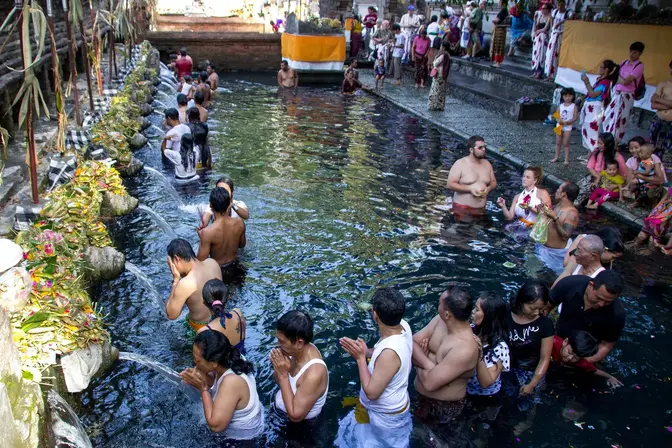
The purification pools at Tirta Empul. Each spout has its own purpose, and the queue moves one spout at a time. Photo: Antonia from Munich, Germany, CC BY-SA 2.0, via Wikimedia Commons; resized and converted to WebP.
If you want quiet, go to Pura Mengening a few minutes up the road. It draws on the same springs, with a fraction of the people and room to pray.
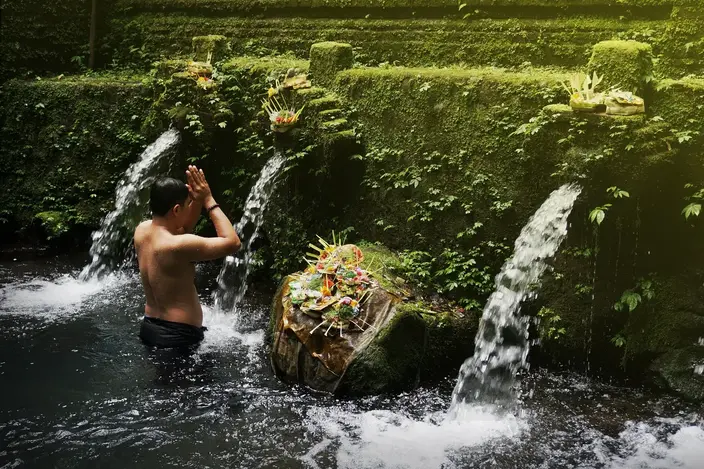
Pura Mengening, a few minutes from Tirta Empul. Same spring water, a fraction of the crowd. Photo: Anggabuana, CC BY-SA 4.0, via Wikimedia Commons; resized and converted to WebP.
Wear a sarong and sash around the temple. Staff lend both at the entrance. For the pools, rent the green bathing sarong and a locker for IDR 25,000 to 35,000. Swimwear underneath is fine. A bikini on its own is not. Then follow the line.
Start at the first spout on the left and work along in order. Put your palms together, let the water fall over your head, then move on.
Skip Tirta Pengentas and Tirta Pabersihan. Those two serve funeral rites only. Staff will point them out if you ask.
Do not use soap or shampoo in the pools, and do not swallow the water.
If you have your period, stay in the outer courtyard. The rule is customary across Bali. Nobody will check, and it is on you.
2. Walk through Penglipuran village
Penglipuran sits in the Bangli highlands, about 90 minutes from Ubud. The main street is stone, every bamboo gate matches the next, and the forest at the top of the village supplies the material for the houses. UN Tourism named it one of its Best Tourism Villages in 2023.
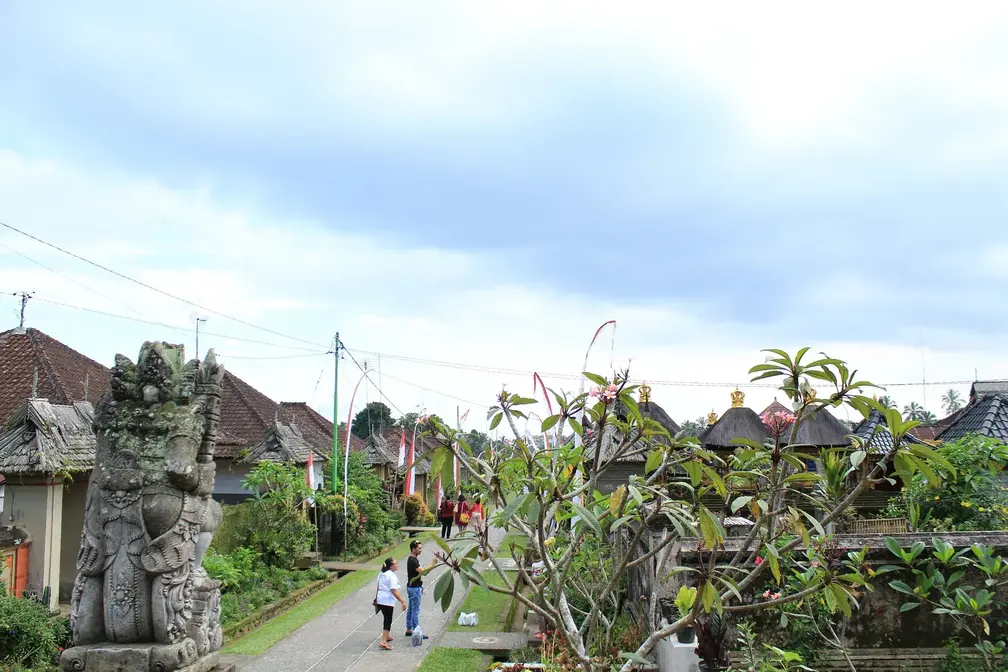
The main street at Penglipuran. No vehicles, no litter, and a gate that matches its neighbour. Photo: Festus Nathanael Simanullang, CC BY-SA 4.0, via Wikimedia Commons; resized and converted to WebP.
Since January 2026 you buy a package rather than a ticket. Package one is IDR 50,000 for foreign adults and IDR 30,000 for children. It covers the main street, the compounds and the bamboo forest. Package two, at IDR 125,000, adds a local guide. The village is open 08:00 to 18:30.
People live here, so the rules are theirs. No vehicles on the main street, no swimwear, and no walking into a family compound without asking. The quiet windows are 08:30 to 10:00 and after 15:00, once the day buses leave.
You can also sleep there. Several families rent rooms, and the village runs cooking classes and a breakfast service on the main street before the crowds arrive. Spend the night and you see it empty.
3. Hit a morning market (pasar pagi)
Set an alarm for 6am and go to a market where people buy food, not souvenirs. In Ubud, the art market faces the palace on Jalan Raya, and the eastern end is still a working produce market. That is the half worth seeing before 08:00. By mid-morning the souvenir stalls open and the prices go up. If someone sells laklak, the rice flour pancakes with grated coconut, buy two.
Two other markets are better value. Sukawati, south of Ubud, is the wholesale end: sarongs for around IDR 25,000 to 60,000, bags and carvings for less than the art market quotes. In Denpasar, Pasar Badung and Pasar Kumbasari face each other across the river. They sell spice paste, coffee, temple supplies and textiles to people who live there.
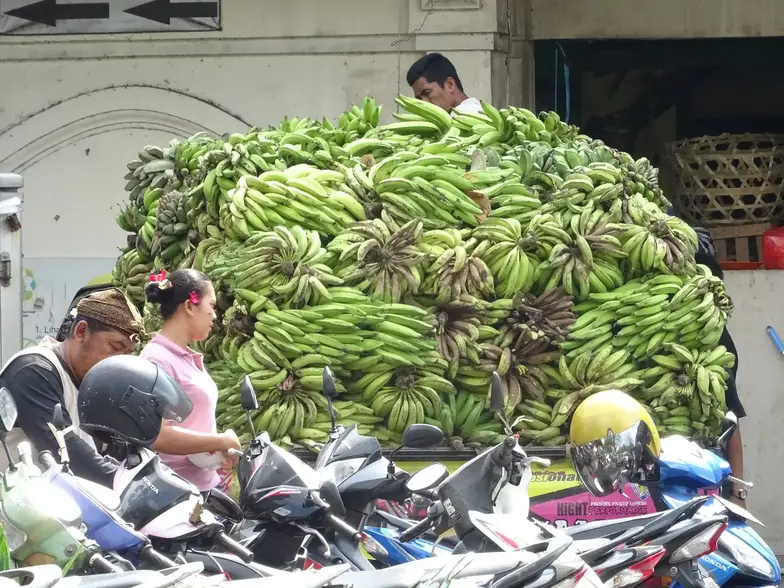
Bananas by the truckload at Pasar Badung in Denpasar, where the buyers are locals. Photo: Christophe95, CC BY-SA 4.0, via Wikimedia Commons; resized and converted to WebP.
Bargaining has one rule that visitors break constantly: if you name a price and they accept it, you buy. Opening at 30 to 50 percent of the asking price is normal. Do not walk away after you agree a deal. Bring small notes, because nobody has change for IDR 100,000 at 6:30am.
4. Walk the subak at Jatiluwih
Jatiluwih is the biggest stretch of rice terraces in Bali, and the reason to go is the walk, not the viewpoint. The terraces form part of the UNESCO-listed Cultural Landscape of Bali Province, inscribed in 2012. That listing covers five rice terraces and their water temples across 19,500 hectares, run by a water-sharing system that dates to the 9th century (UNESCO).
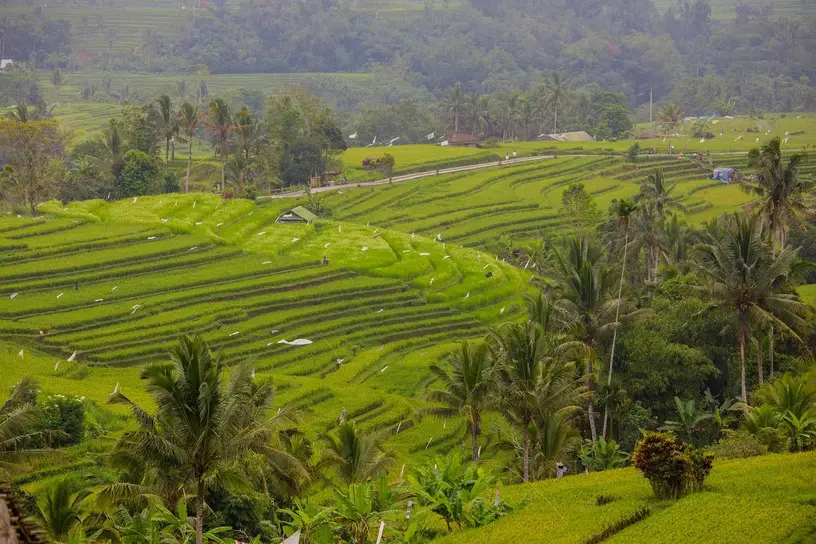
Jatiluwih from the ridge. The terraces are a working farm inside a UNESCO-listed water system. Photo: Thomas Fuhrmann, CC BY-SA 4.0, via Wikimedia Commons; resized and converted to WebP.
Entry is IDR 75,000 for foreign adults and IDR 50,000 for children, and the gates open 08:00 to 18:00. Five marked trails run from 1.5 km, about 40 minutes, to 7 km and four hours. Stay on them. The paddies are someone's crop, and the soil is looser than it looks.
Go between 07:00 and 10:00, before the cloud builds over Mount Batukaru. The harvest calendar decides what you see. Farmers plant the main red rice crop in January and February. It stays green through April, turns gold in May and comes off around June. A second crop from July turns the valley green again from August to October.
One practical warning. Grab and Gojek drivers rarely take the return trip from the hills. Book a car and driver for the round trip, and agree a pickup time before you walk in.
Quick reference: what it costs and when to go
Experience | Where | 2027 cost | Best time |
|---|---|---|---|
Melukat | Tirta Empul, Gianyar | IDR 75,000 adult, 50,000 child | 08:00 or after 16:00 |
Village walk | Penglipuran, Bangli | IDR 50,000 adult, 125,000 guide | 08:30 to 10:00, after 15:00 |
Subak walk | Jatiluwih, Tabanan | IDR 75,000 adult, cash only | 07:00 to 10:00 |
Morning market | Ubud, Sukawati, Denpasar | Free | 06:00 to 09:00 |
Prices verified 19 November 2026. Bali attractions usually adjust at the start of the year, so confirm at the gate.
Time your visit around the calendar
A ceremony can make a day and also close the road you needed. A handful of dates matter in 2027.
Nyepi, the Day of Silence, falls on 8 March. For 24 hours the island stops. The airport closes, the roads empty, and hotels keep guests inside. The night before, villages parade and burn ogoh-ogoh, the giant papier-mache demons. That parade is worth planning a trip around. Nyepi itself is not a day to schedule anything.
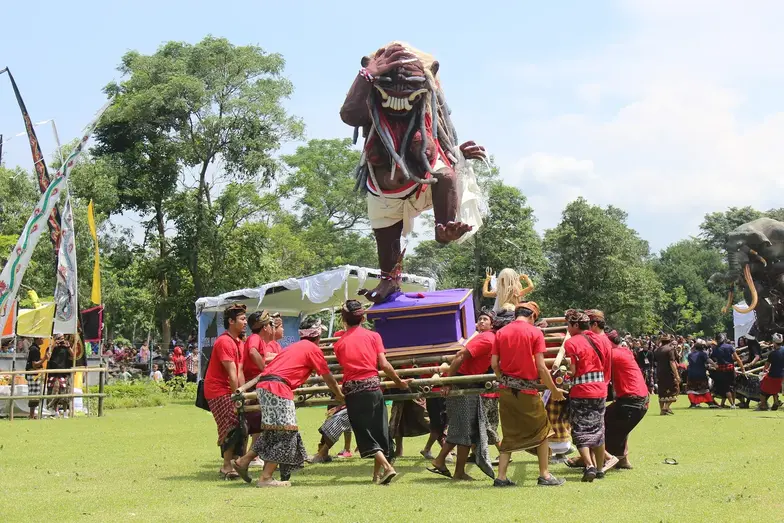
An ogoh-ogoh on its way to the parade. Villages spend weeks building them, then burn them the night before Nyepi. Photo: FaizAttariqi, CC BY-SA 4.0, via Wikimedia Commons; resized and converted to WebP.
A few days before, Melasti processions carry temple relics to the sea. Tanah Lot, Padang Padang and the Sanur beachfront are the usual places to watch. Stand back, let the procession pass, and do not step into the road for a photo.
Galungan, the biggest temple festival, comes around every 210 days, which means it lands twice in most years. Penjor, the tall bamboo banners, go up outside every house, and the roads fill. Check the dates for your month before you book, because hotels and drivers fill early.
If you are here between mid-June and mid-July, the Bali Arts Festival runs in Denpasar with nightly dance, gamelan and craft markets. It is the one event where you watch Bali perform for itself rather than for visitors.
Five rules for respectful travel
You will see small palm-leaf baskets with flowers, crackers and incense on sidewalks, doorsteps and even parked scooters. Those are daily offerings. Do not step on them, move them for a photo, or let your bag knock them over.
Cover your knees and shoulders at any temple, and wear a sarong and sash at sacred sites. Most temples rent or lend them at the gate. Keep one in your daypack and you avoid the argument.
Do not enter the inner courtyards, the utamaning and madyaning mandala, unless you pray in Balinese dress. Do not climb statues, meru towers or sacred trees. If you have an open wound, or you have your period, stay out of the sacred areas and the pools. The rules vary by temple, so ask at the gate.
The province's visitor rules also ban single-use plastic. They ask you to hire a licensed guide at tourist attractions, and to change money at a bank or a licensed outlet. Photography is the one people get wrong most often. Ask before you photograph someone praying, and never stand above a priest for a better angle.
The rules come down to one thing: a village, a spring and a rice field are places where people live and pray. Get that right and nobody will mind you being there.
The logistics are worth handing to someone else. The good sites are in the hills, and the roads are narrow. A driver who knows which temple holds a ceremony today is worth more than a cheaper fare. BaliRoam's private car charter covers a full day, and the curated packages build the temple runs in.
Frequently Asked Questions
What should I wear to visit temples in Bali?
Knees and shoulders need to be covered inside any temple. Most temples rent sarongs at the entrance for a small fee. Keeping one in your daypack saves you the trouble.
What is a melukat purification ceremony?
Melukat is a Balinese Hindu water purification ritual performed to wash away negative energy. Tirta Empul is the most famous spot, but quieter alternatives include Pura Mengening or the canyon waterfall at Sebatuh where you will find fewer tourists.
When is the best time to visit traditional markets in Bali?
Go between 6 AM and 8 AM, before the souvenir stalls open. That is when the market is full of locals buying fruit, spices, and flowers for the daily offerings. Bring small bills, from Rp 5,000 to Rp 20,000.
Is it OK to take photos of people at temples and ceremonies?
Be mindful. Some people at temples will be praying, not posing. Give them space. Before taking a photo of someone, catch their eye and smile. If they turn away or look uncomfortable, do not take the shot.