
Where to stay in Bali in 2027: a neighborhood and area guide
November 17, 20268 min read6 views
where-to-stay-in-balibali-neighborhood-guidecanggu-vs-uluwatuubud-vs-sidemensanur-balibali-villas-2027first-time-in-balibali-area-guideseseh-and-cemagibali-2027
Where to stay in Bali in 2027: a neighborhood and area guide
Choosing a base in Bali used to be a personality quiz. In 2027 it is a logistics decision. The island took 6.95 million foreign arrivals in 2025, a record. In 2026 it runs about 2 percent behind that pace, not collapsing (Horwath HTL). The roads have not kept up with either number.
The average star-hotel stay is 2.77 nights (BPS Bali). That is why most people end up seeing three bases badly instead of one well. Pick two. Spend at least three nights in each. Choose the area for the mornings and evenings you will actually have there.
Four areas decide most trips: the west coast, the Bukit, Ubud versus Sidemen, and Sanur. A few others are worth knowing, and the booking rules changed this year.
1. Canggu and the new west coast (Seseh and Cemagi)
Best for: remote work, cafes and a social scene
Canggu is still the main hub for remote workers, creators and surfers. Batu Bolong has forgiving waves. The cafe scene is the deepest on the island. The beach clubs sit along the same stretch of sand.
The main road is the bottleneck. The transport agency shelved the one-way scheme meant to ease the traffic in June 2026. Every alternative road is the same width and already full (Bali Sun). Stay in one neighborhood per day. Walk or ride short distances.
Pererenan, the next village north, is the quieter version: more residential, similar villa prices, fewer late-night bars. Seseh and Cemagi, the next villages up the coast, are where the villa belt moved. Black sand, rice paddies, no beach-club strip. The Anantara Dragon Seseh is a 235-unit resort and residence project, with Savaya running the food and drink. It opens in 2028 (Bali Sun).
That gives the low-rise version of Seseh a shelf life. If you want the version people are still posting about, go now. If you want a walkable base with restaurants on the corner, it is the wrong choice.
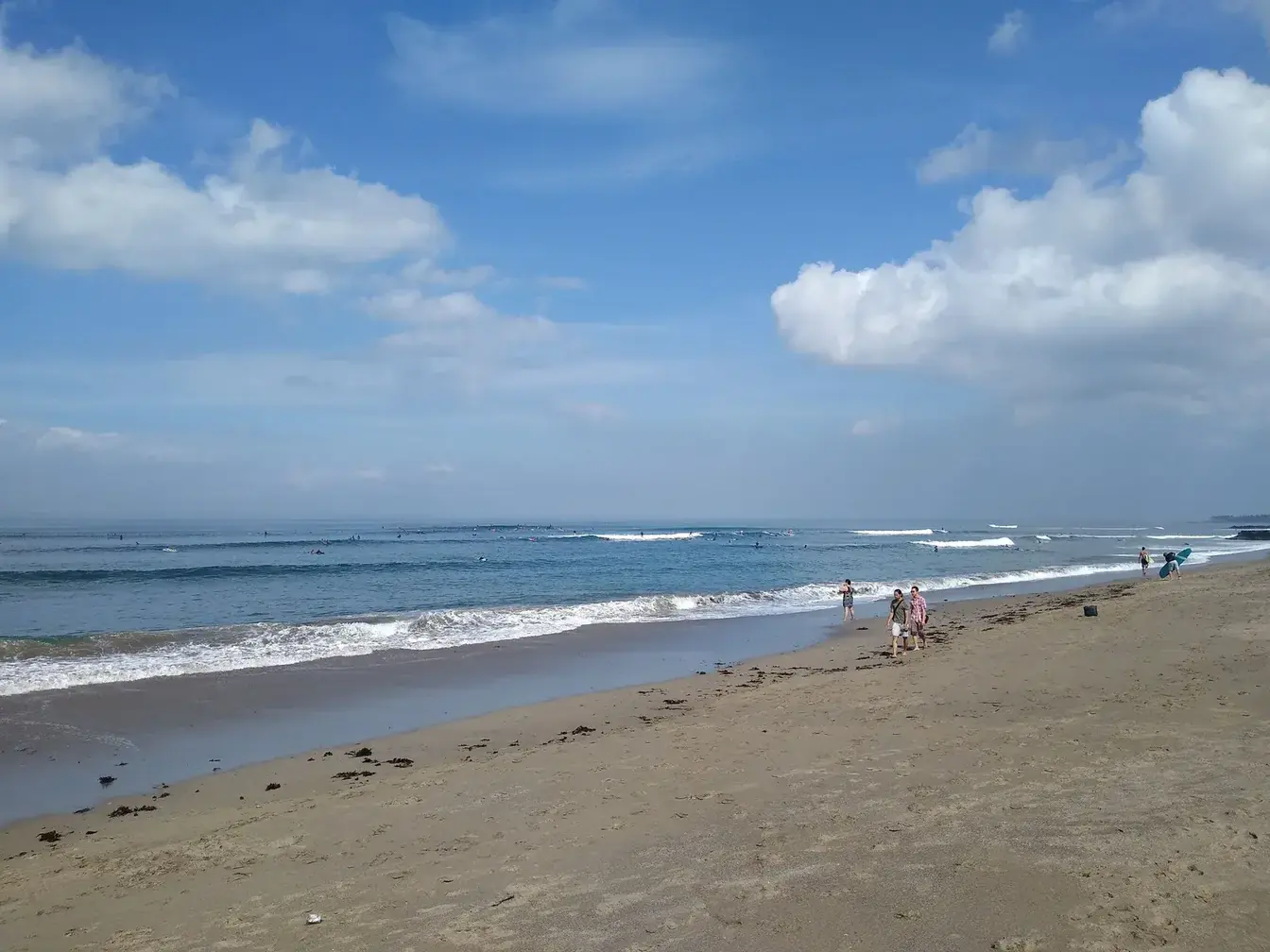
Canggu beach. The sunset is the reason people tolerate the road in. Photo: Mx. Granger, CC0, via Wikimedia Commons; resized and converted to WebP.
2. Uluwatu and the Bukit Peninsula
Best for: surf, cliff views and resort quiet
Uluwatu sits on the limestone cliffs at Bali's southern tip. It shares the island's highest room rates with Jimbaran. The submarket averaged IDR 4.8 million in 2025, double the Bali average (Horwath HTL). You pay for the view, the pool and the quiet. Convenience is extra.
Access got much worse in 2026. The Sterling Shortcut was the private road that linked Bingin with Dreamland, Balangan and Jimbaran. It closed without notice in February 2026. The detour added an hour to the Jimbaran run at peak (Bali Sun). The area's smaller access roads jam just as quickly.
Stay in Bingin, Padang Padang or Pecatu. Accept that nothing is walkable. You need a scooter or a driver, and you should add an hour to any airport run at peak. The mood is upscale and laid-back: clifftop infinity pools, adults-only retreats, sunset acoustic sessions instead of nightclubs.
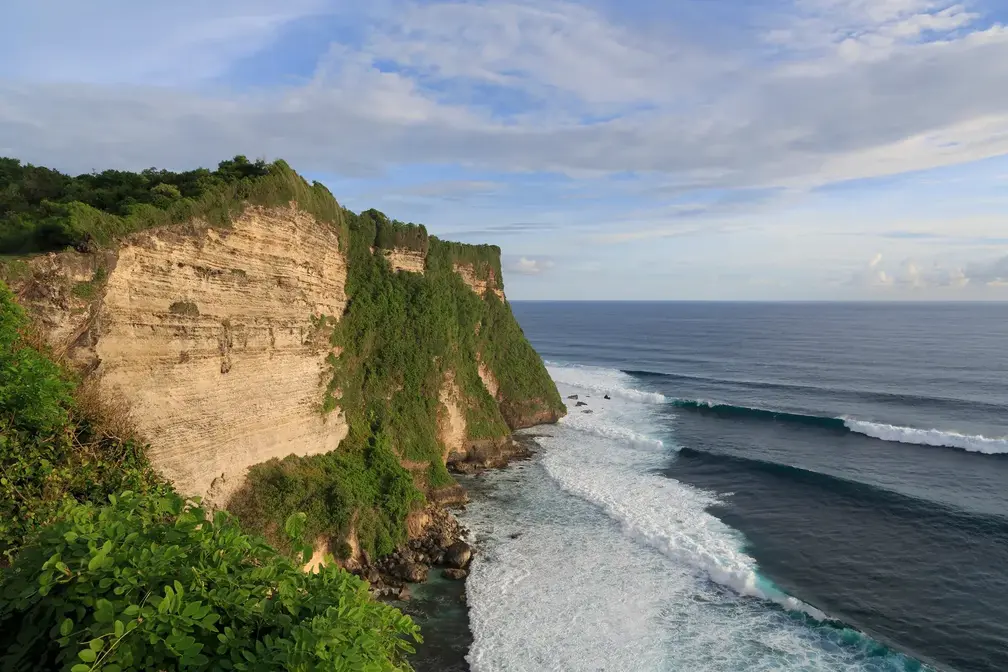
The cliffs below Uluwatu. Everything here is a scooter ride away, including the beach. Photo: CEphoto, Uwe Aranas, CC BY-SA 3.0, via Wikimedia Commons; resized and converted to WebP.
3. Ubud vs. Sidemen: the cultural conundrum
Best for: yoga, rice terraces and a slower pace
Ubud is Bali's cultural heartland. It is also a small town with a traffic problem. Room rates rose 11 percent in 2025. Revenue per available room rose 5.6 percent, even as occupancy softened (Horwath HTL). Demand concentrates in the good properties.
The center began testing one-way systems in August 2026. The September version gridlocked Jalan Raya Ubud and Jalan Hanoman for four hours on its first day. The transport department partly rolled it back.
Tour buses are now barred from the narrow core. They drop passengers at Dalem Puri, a 15-minute walk from the palace (Bali Live). Stay in Kedewatan or Tegallalang if you want the postcard valley view. Budget for a driver, because you are no longer walking to dinner.
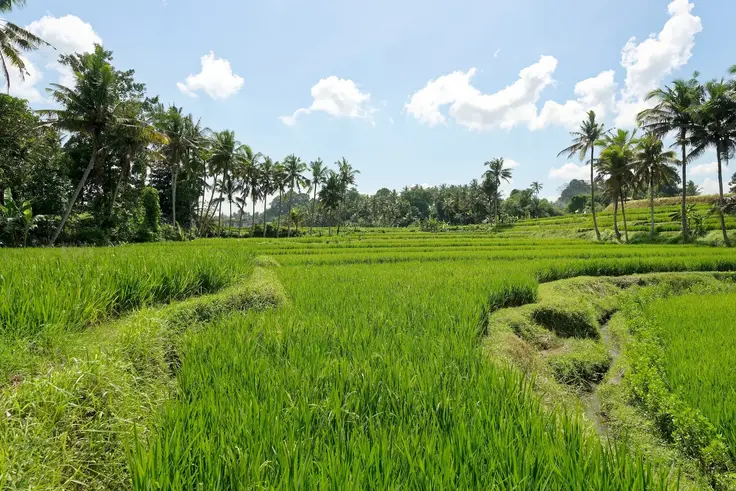
Rice fields near Ubud. The good views sit outside the center, which is the trade-off. Photo: Jakub Hałun, CC BY-SA 4.0, via Wikimedia Commons; resized and converted to WebP.
Three Ubud hotels plan to open in 2027. Radisson Collection's Atiara has 52 rooms (HotelNewsResource). Hotel Indigo brings 130 keys near Blangsinga, and the Apurva Kempinski adds 160 rooms in Tegalalang. More supply will not make rooms cheaper. The good ones will still book first.
For a quieter, crowd-free version, Sidemen in East Bali is the comparison that still holds. It sits under Mount Agung, about 90 minutes east of Ubud. The valley has rice terraces, a river, rural hiking trails and small eco-lodges. There are no beach clubs, no coworking scene and very little ride-hailing. Two nights is enough for the valley. Stay three if you want to hike and do nothing afterward.
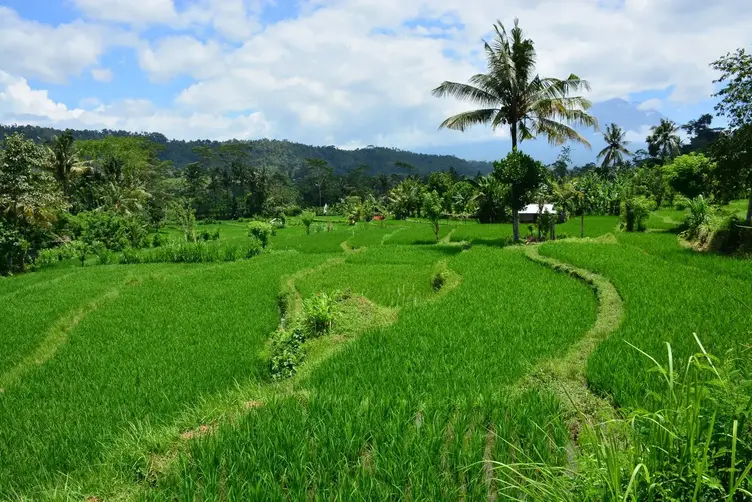
Sidemen. The valley is the attraction, and the infrastructure is deliberately minimal. Photo: Paul Arps, CC BY 2.0, via Wikimedia Commons; resized and converted to WebP.
4. Sanur
Best for: families, walkable days and the Penida ferry
Sanur has become the most practical base on the island for anyone who does not want to ride a scooter. The beachfront promenade is paved and flat. The water is reef-protected and calm. The harbor runs fast boats to Nusa Penida and the Gilis.
The area changed in June 2025, when the Sanur Special Economic Zone opened around Bali International Hospital. The hospital has 255 beds, cardiology, oncology, neurology and a full emergency department (Bali Sun). For older travelers, or anyone traveling with a parent, that matters.
Prices sit 20 to 30 percent below equivalent west-coast rooms. The pace is slower. There is less nightlife, fewer design hotels and no surf break worth the name. What you get is a walkable beach town where breakfast, lunch and dinner do not require a car.
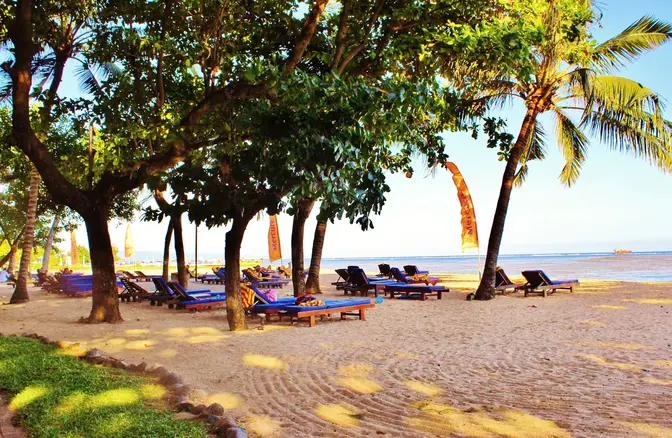
The Sanur beachfront. The promenade runs for miles, and the water stays shallow. Photo: Michelle Maria, CC BY 3.0, via Wikimedia Commons; resized and converted to WebP.
The areas this guide does not cover
Nusa Dua ran the highest hotel occupancy in Bali in 2025 at 79.2 percent. The reason is easy to see: gated resorts, a calm beach and a convention center. It is a compound, not a neighborhood. If you want to leave the gate, you need a car. The peninsula is also mid-way through a public-space renovation, so building work blocks some beach access.
Seminyak has the restaurant row and the beach clubs, and the villa prices that come with both. It is a good base for a short, social trip. It is a bad one if you want quiet.
Amed is the value option on the east coast: cheap rooms, black sand, excellent diving and no ride-hailing coverage. A scooter is mandatory. The airport transfer is two and a half to three hours. Go for the water, not for the convenience.
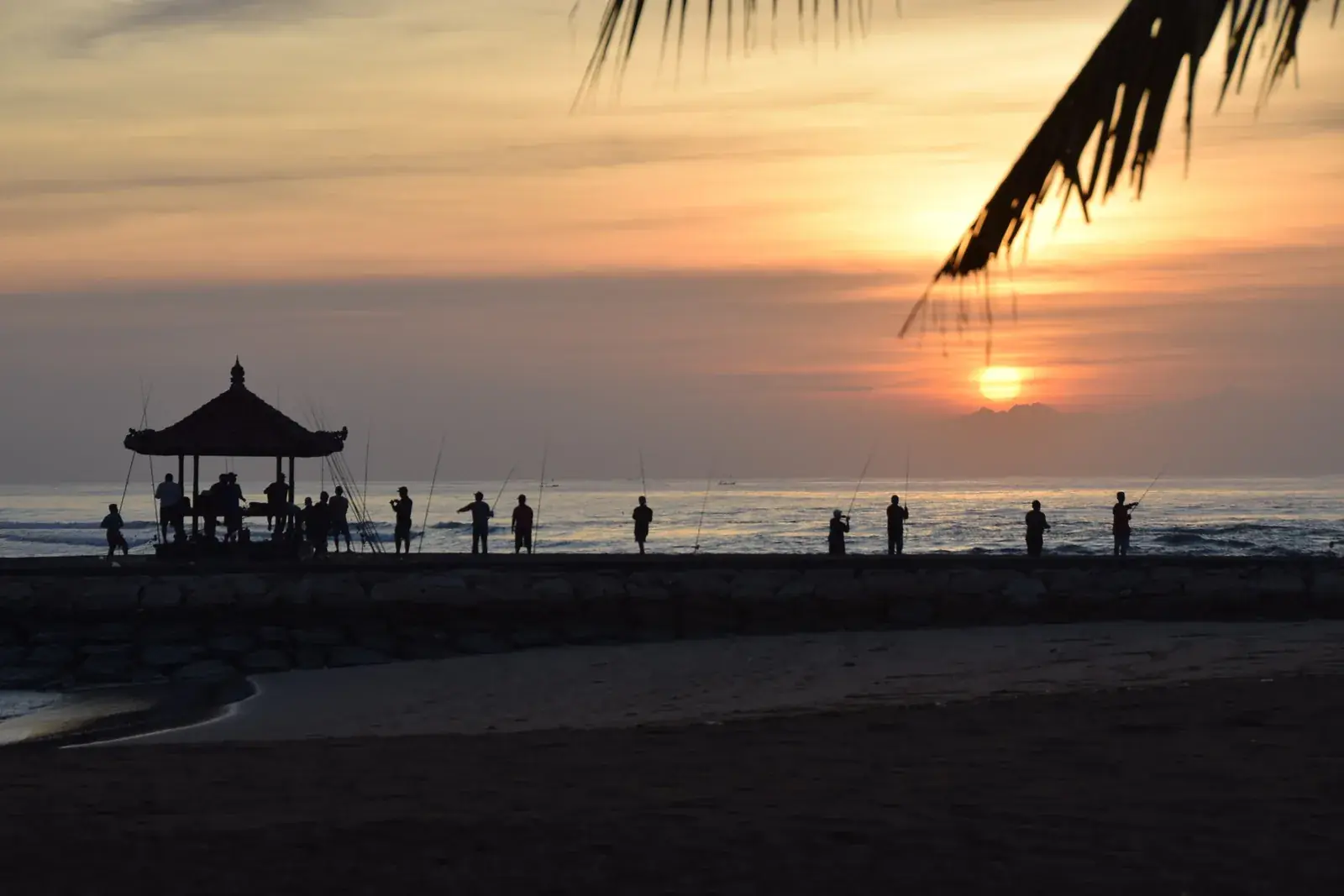
Nusa Dua. Polished and self-contained, which is either the point or the problem. Photo: GdML, CC BY-SA 4.0, via Wikimedia Commons; resized and converted to WebP.
At a glance: which Bali area fits your budget and vibe
Area | Feel | Best for | Nightly, two people | Main trade-off |
|---|---|---|---|---|
Canggu | Busy and social | Cafes, surfing, remote work | IDR 1.2m-2.7m | Main-road traffic |
Seseh/Cemagi | Quiet and rural | Private villas, sunsets | Villas from 7.3m | Nothing walkable; construction from 2028 |
Uluwatu | Cliffside and spread out | Surf, luxury, ocean views | IDR 1.5m-4.8m | Access got worse in 2026 |
Ubud | Cultural and green | Yoga, rice terraces, wellness | IDR 900k-2.4m | Traffic trials; driver needed outside center |
Sidemen | Rural and slow | Hiking, silence, Agung views | IDR 400k-900k | Minimal infrastructure |
Sanur | Calm and walkable | Families, older travelers, ferries | IDR 900k-2m | Little nightlife |
Nusa Dua | Gated and polished | Resort families, conferences | IDR 2m-4.8m | You rarely leave the compound |
Room rates for two people, based on 2026 posted rates and Bali's 2025 average ADR of IDR 2.4 million. Private-pool villas start around IDR 7.3 million a night and the price covers the villa, not each person. Confirm before booking.
Book early, and check the license
Peak season is June to September, with a second spike over Christmas and New Year. Book hotels three to six months ahead. Book beachfront villas six to twelve months ahead. The good properties in Ubud and Uluwatu sell out first, because demand concentrates there.
Nyepi falls on 8 March 2027. The airport closes, hotels do not check guests in or out, and nobody leaves the compound for 24 hours. The end of Ramadan is expected around 9 March, so Eid travel lands in the same week. If your dates overlap, book the nights before and after. Confirm that your hotel will serve food.
One rule changed quietly in 2026. Short-term rentals had to show full legal compliance by 31 March 2026. The provincial conduct rules also require visitors to stay in licensed accommodation. Ask for the license, or book a hotel. The cheapest villa listing is often the one that cannot legally host you. A mid-stay closure is not a refund situation.
Water is the other question worth asking. South Bali had a dry-season shortage in 2026. It left 1,448 households in 16 villages relying on trucked water (Bali Observer). It was not island-wide, and hotels were not cut off. But a villa with a small tank and a full booking sheet is a bad combination in August. Ask how the property stores water before you pay.
Pro travel tip for 2027
Do not try to see the whole island from one hotel room. A day trip from Seminyak to Ubud can take half a day in the car. The Sterling Shortcut closure pushed Uluwatu further away from everything else.
Split the stay instead. Three or four nights on the coast in Uluwatu or Canggu, then three nights in Ubud or Sidemen. Book the transfer between bases rather than improvising it with luggage. Keep the last night close to the airport if your flight leaves before noon.
If you want the driving handled by someone who knows which shortcuts are open, start with a private car charter. If you would rather have the bases and transfers built into one price, browse the curated packages. They show what a fully transferred week costs against the DIY version.
Frequently Asked Questions
Which area of Bali is best for digital nomads?
Canggu remains the main hub for digital nomads, with plant-forward cafes, coworking spaces, and beachfront clubs. For a quieter alternative, neighboring Seseh and Cemagi offer black-sand sunsets and private villas with a calmer residential feel surrounded by rice paddies.
Should I stay in Ubud or Sidemen?
Ubud is Bali's spiritual heartland with misty jungle valleys, rice terraces, and bamboo eco-resorts. Sidemen in East Bali is a quieter alternative with rivers, rural hiking trails, and boutique eco-lodges focused on slow living. Think of Sidemen as the Ubud of 30 years ago, with fewer crowds and more direct connection to local village life.
Is Sanur a good choice for families?
Yes. Sanur's shallow, reef-protected waters are calm and safe for swimming. A paved beachfront promenade runs for miles, letting families cycle or walk to seaside warungs and resorts without dealing with scooter traffic. It is also the most convenient base for day trips to Nusa Penida.
What kind of traveler is Uluwatu best for?
Uluwatu is best for travelers seeking clifftop luxury, dramatic beaches, and surf culture. It offers clifftop infinity pools, adults-only boutique retreats, and sunset acoustic sessions rather than nightclubs. The area is spread out, so you will want a scooter or private driver.
Should I split my stay between two areas in Bali?
Yes. Bali's traffic means a day trip from Seminyak to Ubud can take up to four hours in a car. A recommended split is three to four nights on the coast in Uluwatu followed by three nights of jungle quiet in Sidemen or Ubud. This avoids spending half your trip stuck in traffic.